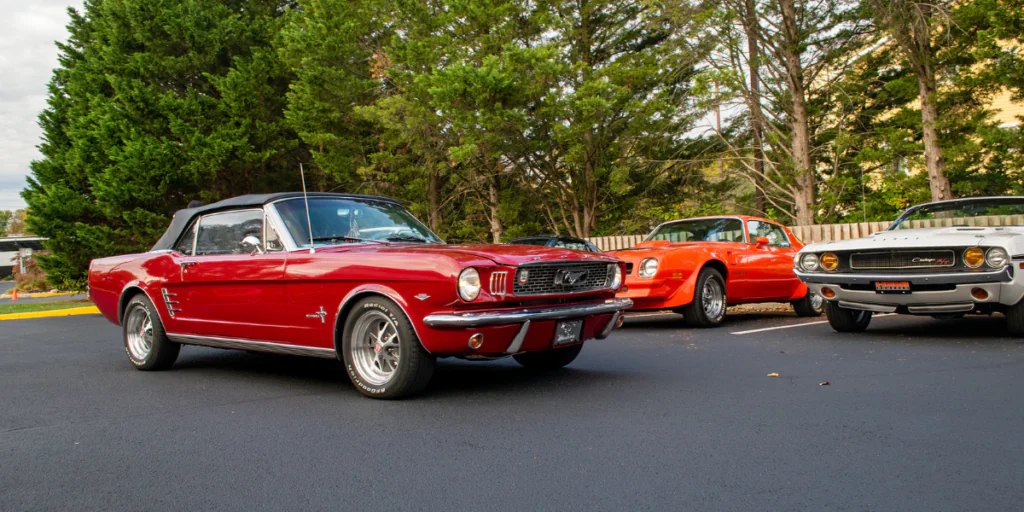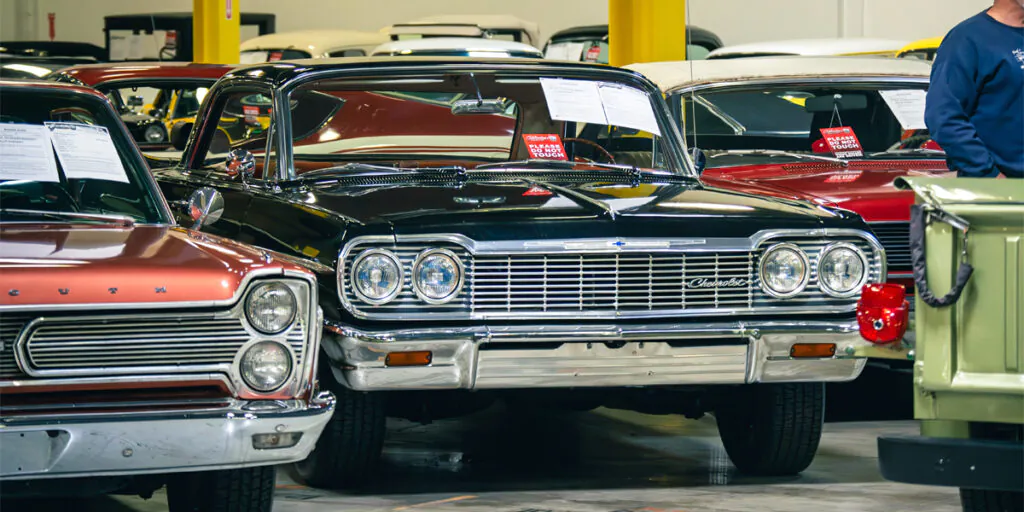
It’s been almost thirty-seven years since “Disco Demolition Night” premiered at Comiskey Park on the south side of Chicago. More than fifty thousand people brought disco records for destruction, with twenty thousand more refused entry to the overcrowded park. The crowd stormed the field, set fires, and stole the bases from the diamond. It was July of 1979, and America was feeling restless about everything from disco music to the “gas guzzlers” of the day.
Fast forward to 2026, and disco is everywhere. It’s in airports, restaurants, and in the sampled tracks used by today’s popular music. In fact, you could say that disco is having a bit of a revival. And the cars of the seventies are gaining in popularity among young drivers the same way the music of Donna Summer, Barry White, and The Emotions is climbing Spotify playlists. We’ve come up with seven of the decade’s most iconic cars from around the world. So, what are you waiting for? Cue up a vinyl record on the player and dream along with us.
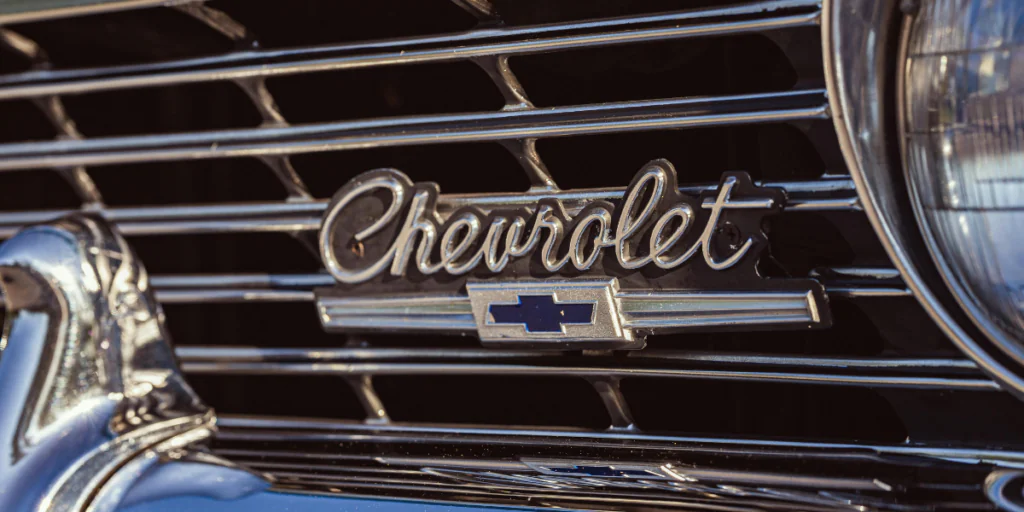
Chevrolet Chevelle Laguna (1973-1976)
If there is one car that defines the 1970s in America, it is the “Colonnade” style personal luxury coupe from General Motors. Sold by Buick (Regal), Pontiac (Le Mans), Oldsmobile (Cutlass) and Chevrolet (Malibu/Monte Carlo), this mid-sized two-door sat at or near the top of sales charts from 1973 to 1978, when it was replaced by a downsized platform. There are enough special variants to fill a whole article, from the “international” Cutlass Salon to the Pontiac Grand Am, but the Chevelle Laguna is on everyone’s radar nowadays thanks to 2011’s film “Drive”, starring Ryan Gosling. It’s bigger than a Bentley Continental GT, and with a little tuning can make similar power, but it has way more style.
Chrysler Cordoba (1975-1979)
Here’s a fun fact: Ricardo Montalban never actually says “rich Corinthian leather” in the famous TV advertisements for Chrysler’s take on the personal luxury coupe. And what is Corinthian leather, anyway? It’s just a term the marketing team invented. The rest of the car, however, had some real virtues: it was powerful (for the era), smooth, comfortable, and built reasonably well. Most of all, it made its owner feel successful. The Dodge boys had their own version, called “Charger SE”, but it is almost identical on the outside… so if you buy one of those, don’t be surprised if someone asks about the leather!
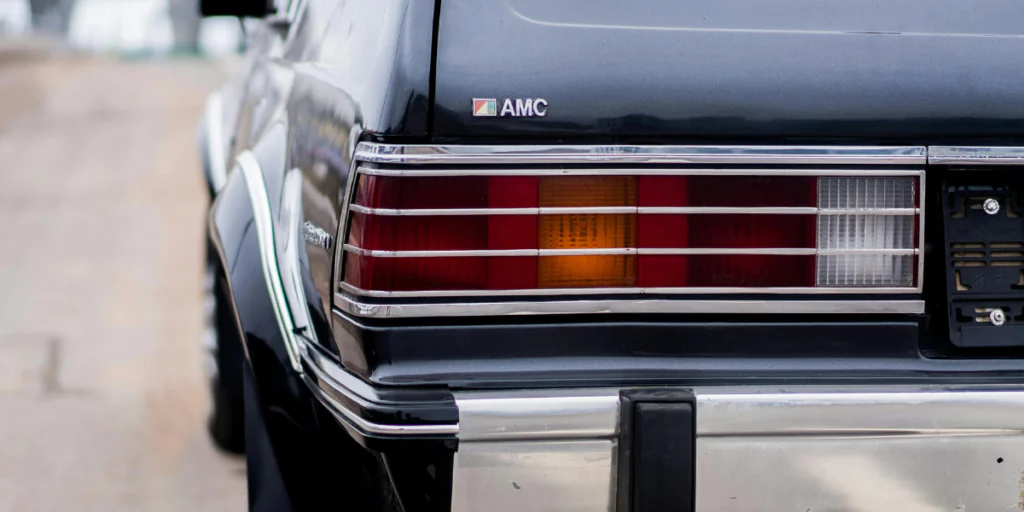
AMC Pacer (1975-1980)
Does a small car need to be cramped? That’s the question American Motors was asking when they designed the Pacer. Everyone knew that the market was increasingly focused on fuel economy and “downsized” proportions, but the Big Three’s early attempts at small cars didn’t have a lot to recommend them. Enter AMC, which wanted the Pacer to be a premium compact. The styling: one of a kind. The spaciousness: unbeatable. Unfortunately, the rotary engine around which the Pacer was initially designed didn’t arrive in time, so this “economy car” went out with massive inline-six and V-8 engines. Gas mileage wasn’t great, and the Pacer became a laughingstock to the point that the film “Wayne’s World” used it for reliable laughs. Nowadays, however, buyers are starting to fall in love with their unique look and proportions. They aren’t the first people to love the Pacer, either. As we will see, the wide-but-short AMC inspired another very famous seventies hatchback.
Found your next collector car? Protect it in minutes.
No depreciation, no surprises. ACI's agreed value coverage gives you the full amount you insured it for.
Ford Mustang Turbo Cobra (1979)
The Blue Oval’s reboot of the Mustang was a serious one. Gone was the Pinto architecture and economy-car interior of the Mustang II, replaced by the brand-new Fox platform and styling that was so European and clean it made the contemporary Capri, still sold in Germany and the UK, look baroque. While the Fox-based Mustang would go on to achieve permanent renown with a 302-cubic-inch V-8 under the hood, 1979 offered a very different powertrain option for those who were looking into the future: a 132-horsepower turbocharged “Lima” 2.3-liter inline-four. It was almost exactly as quick as the “five point oh” but offered better fuel economy. Two options you wouldn’t have wanted to miss: the TRX suspension package with its metric-sized wheels matched to special Michelin tires, and the “Cobra” exterior aerodynamics and styling package. A 1979 Turbo Cobra was a big deal indeed, and its spirit lives on in today’s 2.3-liter turbo Mustangs.
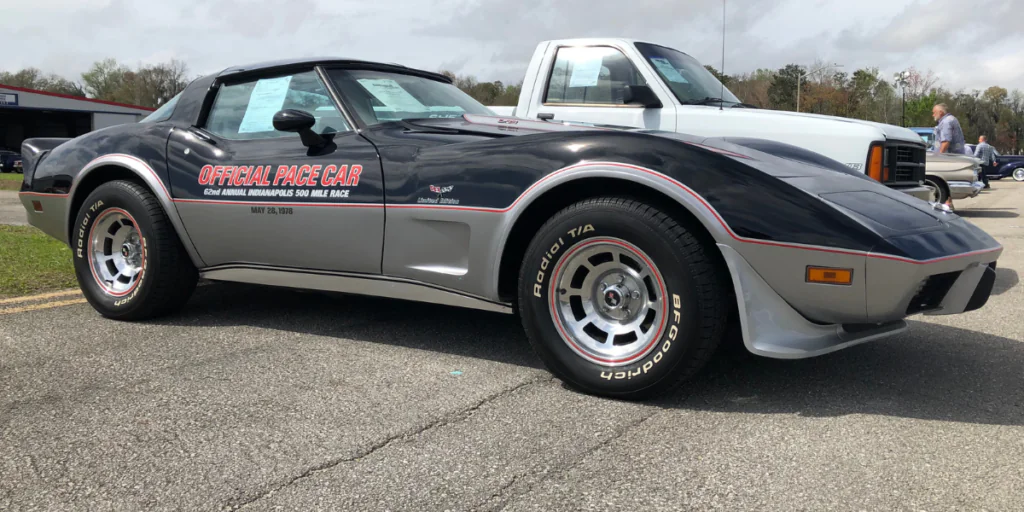
Chevrolet Corvette Silver Anniversary/Pace Car (1978)
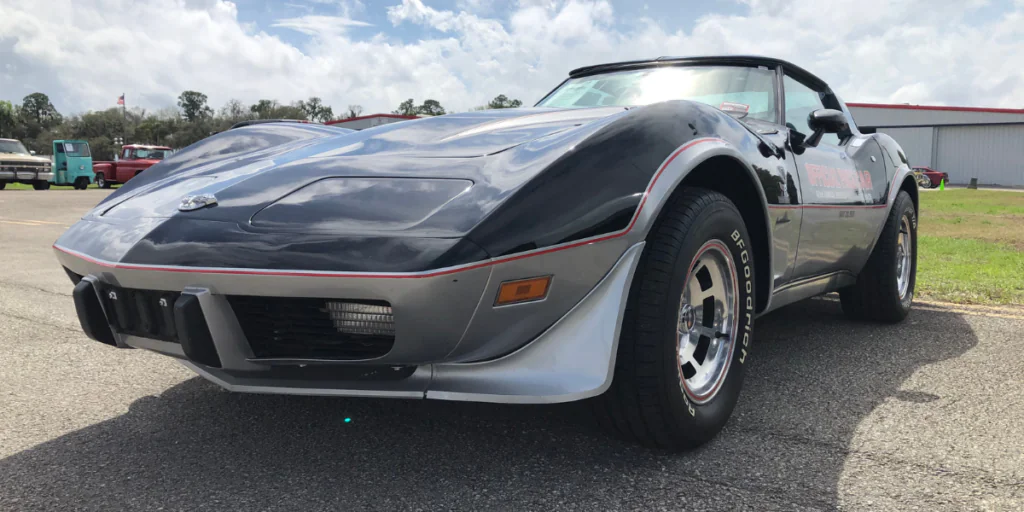
The third-generation Corvette was facing a bit of an identity crisis in the seventies. Emissions regulations and fuel-economy concerns had taken big-block and hi-compression V-8 engines off the menu. Most of the Corvettes that went out the door for the second half of the decade featured the combination of a sleepy “smogged” 350 small-block and an automatic transmission. For 1978, Chevrolet turned up the volume in other ways. A stunning new glass bubbleback modernized the car and fulfilled the visual promise made by a switch the urethane bumpers a few years before; you would have to look closely to see any trace of the 1968 Stingray that was still hiding underneath. The Silver Anniversary car was a sleek two-tone luxury car that just happened to carry a Corvette badge. The Pace Car, on the other hand, had glass roof panels and a completely new front and rear aero package. It was wildly popular. The Pace Car features would become part of the regular lineup in 1979. The last three years of the third-generation Corvette would look quite a bit like the 1978 Pace Car. All are well-loved today.
Porsche 928 (1977-1995)
Remember the AMC Pacer? Porsche’s chief stylist, Latvia-born but USA-raised Anatole Lapine, loved the Pacer so much he used its styling for the ultimate Porsche. Intended to replace the famous 911 model, the 928 had V-8 power and was intended to be sold with an automatic transmission. Comfort at Autobahn speed was the goal, not racetrack prowess, and at that the 928 was unmatched. Its appearance in “Risky Business” educated Middle America about the car, which was astoundingly expensive and therefore a rare sight outside wealthy suburbs. Porsche would continually improve the 928 and extend its performance envelope across a nineteen-year production run, but for most people the early car, with its unique rear bumper and futuristic interior fabrics, is the one that really stands out.
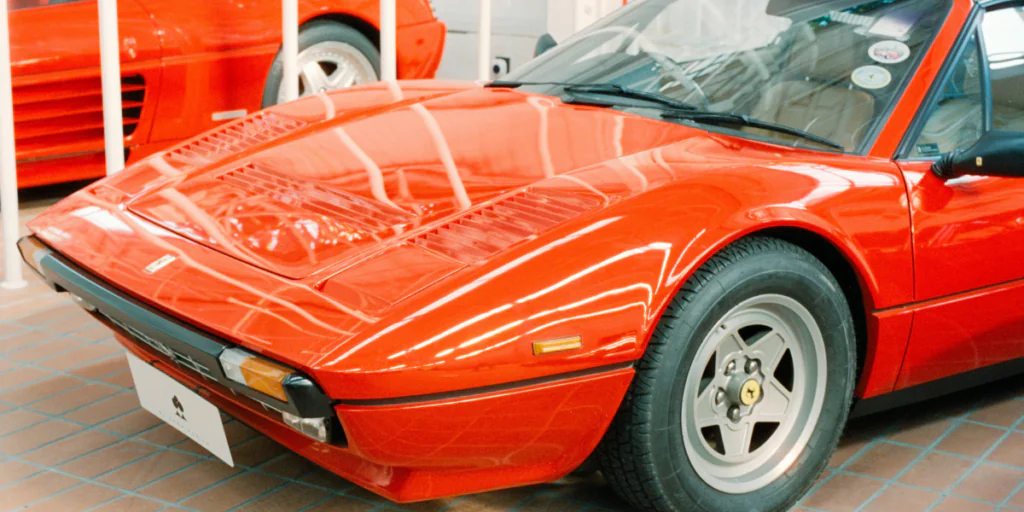
Ferrari 308GTS (1975-1979)
You know it as the car driven by Thomas Magnum in the “Magnum, P.I.” TV show, but the first mid-engined Ferrari to be styled by Pininfarina was more than just a pretty face. It was advanced in concept, design, and execution. A series of engine upgrades kept it fast and relevant as power and pace increased around it. The car was used in competition by Ferrari customers, and we aren’t just talking road racing: a specially modified version made a World Rally Championship podium long before Subaru ever did. The 308 was so beautiful, and so memorable, that it dictated Ferrari styling right up to the present day. The most desirable vehicles to carry the Prancing Horse, from the 288 GTO to the F40 to the LaFerrari and beyond, all pay visual tribute to the flared fenders, sensual curves, and mid-engined proportions of the 1975 Ferrari 308.
Want more seventies supremacy? We could go on: the Volkswagen Rabbit, the Mercedes-Benz 450SL, the Lamborghini Countach, the Cadillac Seville, the Lincoln Continental Mark V. You get the idea. Just like disco, the cars of the seventies have found a new audience in the 2020s. And as was also the case with the greatest disco records, plenty of them have escaped demolition. So, it’s not too late to turn the clock back and take a ride.
Found your next collector car? Protect it in minutes.
No depreciation, no surprises. ACI's agreed value coverage gives you the full amount you insured it for.