Buying a classic car is usually somewhat of an adventure, but a lack of paperwork can turn that adventure story from “Pirates of the Caribbean” to “Marathon Man” in the blink of an eye. In a perfect world, every car we consider would have exhaustive documentation from the build sheet to way the last gas receipt. In the real world, we have to accept that not every car survives a hundred, fifty, or even ten years with all the paperwork intact. This goes double for barn finds, estate sales, and various other situations where there’s the potential for a spectacular deal on the right vehicle.
So how do we fill in those gaps in the story of that potential next purchase? Here’s the good news: it’s never been easier to learn what we need or, just want to know. We’ve put together some tips to help you identify a mystery car, from “what is it?” to “Is that the factory steering wheel?”
Start With the Big Question: What Is This Car?
Let’s start with the most basic problem: we have a classic in front of us that is a complete mystery. It looks like a Packard, or a Bizzarrini, or a Wartburg, but it doesn’t look exactly like one. There’s an easy way to handle this and a hard way.
Using AI and Image Searches as a Starting Point
The easy way: take a picture of it and upload that picture to your favorite AI program. Don’t expect miracles. Not only can AI be a little spotty on older vehicles, thanks to a lack of properly identified photos in the training materials used to “teach” the AI, it can also be quite confidently wrong. This is also true for motorcycles.
Once the AI gives you an answer, double-check by searching the Internet for pictures of what it claims the car to be. If it was spot on, then you’ve gotten lucky. If not, then you’ll need to hit the books.
Verifying With Reference Books and Catalogs
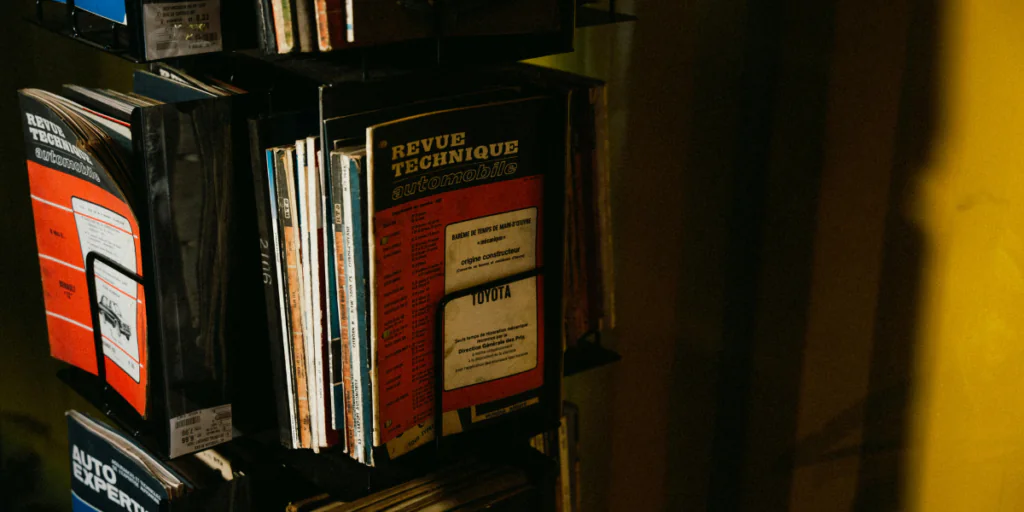
Specifically, you’ll need to check out the Standard Catalog of American Cars or its fancy cousin, the Standard Catalog of Imported Cars. Every enthusiast should own these books, which are generally comprehensive for 1945 to 1990.
Use physical clues on the car, such as logos and manufacturer stamps, to point you in the right direction. Chances are you’ll eventually figure it out.
Identifying Prewar and Early Postwar Classics
Cars built before 1946 can often be identified through marque-specific books. Many of those are available as e-books, meaning you can download them and look through them right away. Sometimes, however, you’ll need to buy an old book off an auction site or marque-related forum and wait for it to arrive. While you’re at it, consider posting a picture of the car to marque forums. There should be someone who is confident as to the answer. However, just because they are confident, it doesn’t mean they are right.
Finding the Exact Year and Model
Once you’ve settled on the make and model, you will want to get more specific. Sometimes it is plain as day what model year a car was built in, as with a C2 Corvette. Other times, like in the case of the Mercedes-Benz “W123” diesel sedans, you’ll need to do some research.
Where to Look for VINs and Serial Numbers
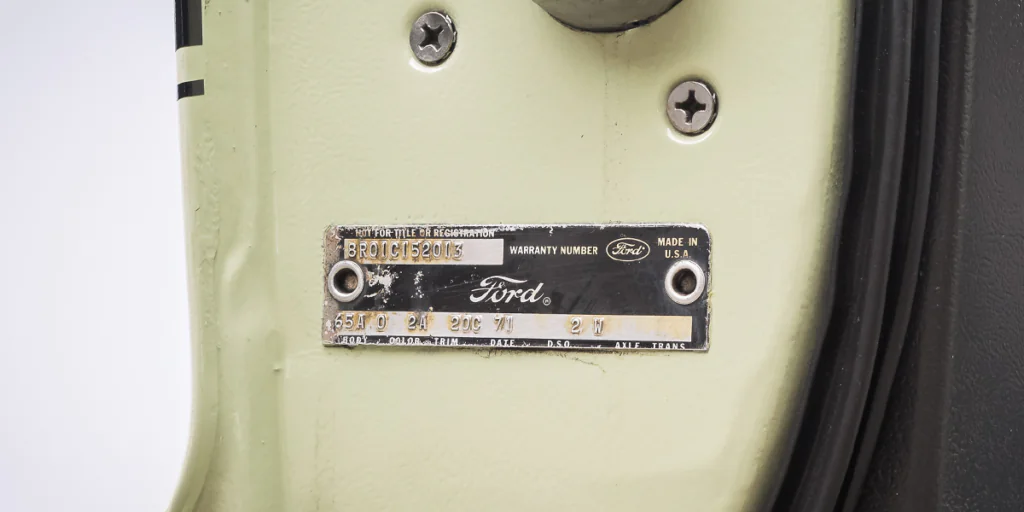
The VIN or serial number plate is your first stop. From the late 1960s, it was visible through the windshield. You can also look for a metal plate on the door jamb. The firewall or radiator support bracket might have a serial number stamping as well.
American cars built before 1960 often have a serial number stamped directly into the chassis rail on the left side, around the driver’s seat.
Check the Car’s History
If you have the VIN available, it never hurts to run it through www.nicb.org to see if there is any history of theft on the vehicle. There’s no such thing as the right deal on a stolen car. The National Motor Vehicle Title Information System (NMVTIS) is another important resource that should be consulted if there’s any doubt whatsoever.
Found your next collector car? Protect it in minutes.
No depreciation, no surprises. ACI's agreed value coverage gives you the full amount you insured it for.
Data Plates and Trim Tags
Can’t find a VIN? Many classics, especially American cars, will have a data plate or trim tag under the hood. This can give you the original factory color, the trim code for interior material, the build date, the body style, the engine code, and, with newer vehicles, the emissions information, including.
- Original factory color
- Interior trim code
- Build date
- Body style
- Engine code
- Emissions information (on newer vehicles)
There are special-purpose websites to decode most of these numbers, but you’ll also have a fair shot of it by just feeding it into a search engine, especially Google Gemini, which is very good with VIN decoding.
Be aware, however, that Gemini and other AI programs may mis-identify a car by a 26-year gap, because the year code in a VIN repeats every 26 years. Still, you probably know if you’re looking at a 1994 Corvette or a 2020 Corvette.
Digging Deeper with Casting Numbers
If your car is missing the above information, consider searching for casting numbers. The engine should have one, as should the transmission and/or rear axle. Look for any number that is stamped into any part of the car. Most of the time it will provide at least some useful clues.
Verifying Factory Configuration and Authenticity
Once you’ve identified the car, and you have a valid ID number, it’s time to see how close the vehicle is to its factory configuration. For Fords, the “Marti Report” is the gold standard. The GM Heritage Center can provide surprisingly detailed information back to the 1930s. The Cadillac-LaSalle Club is also a good resource for those cars. Chryslers can be documented through FCA Historical Services, which can provide a build record for vehicles built from 1930 to 1967.

Factory Documentation for Imported Classics
For imports, BMW, Porsche, Mercedes-Benz, and VW all have factory validation and documentation services that are relatively affordable and many times, highly detailed.
Ferrari does this as well, although it is not cheap.
The British Motor Industry Heritage Trust offers a “Heritage Certificate” for most of the brands that eventually came together under the British Leyland umbrella.
Japanese cars are much tougher to document; contact the 1-800 number for your specific manufacturer and cross your fingers. Miatas and Nissan Z cars can be easy to research; an early Honda Z600, on the other hand, might have no information available at all.
Learning From the People Who Owned It Before You
Finally, there’s the old-fashioned way to research a car: talk to the previous owners. Depending on your state, it may be possible for an investigator to obtain records on title and registration changes throughout the years. While not everyone will want to talk about the Cougar they sold in 1972, you never know what you’ll dig up with a little patient questioning. It’s common for people to remember the past a bit enthusiastically – “could that 1982 Z/28 really run a 13 second quarter mile on the street?” – but sometimes they can point you to a dealership or mechanic who has additional information on the car.

Let the Auction Experts Help
If you’re still stumped after all of the above, there is one almost foolproof way to figure out what your car is: buy it and list it with a major auction house. They have access to an astounding amount of original source material, from factory brochures to reclusive marque experts working overseas. In some circumstances, an auction house will conduct this research for a car that is not yet being offered for sale, just to build a relationship with a potential client. The more valuable the car in question, of course, the better this works.
Solving the Mystery Is Part of the Fun
We hope this list of resources will help you solve your next automotive mystery. You might find out that the process of learning about that unknown classic is a big part of the fun. If that’s the case, then we’ll see you out there… “between the barns”.
Found your next collector car? Protect it in minutes.
No depreciation, no surprises. ACI's agreed value coverage gives you the full amount you insured it for.