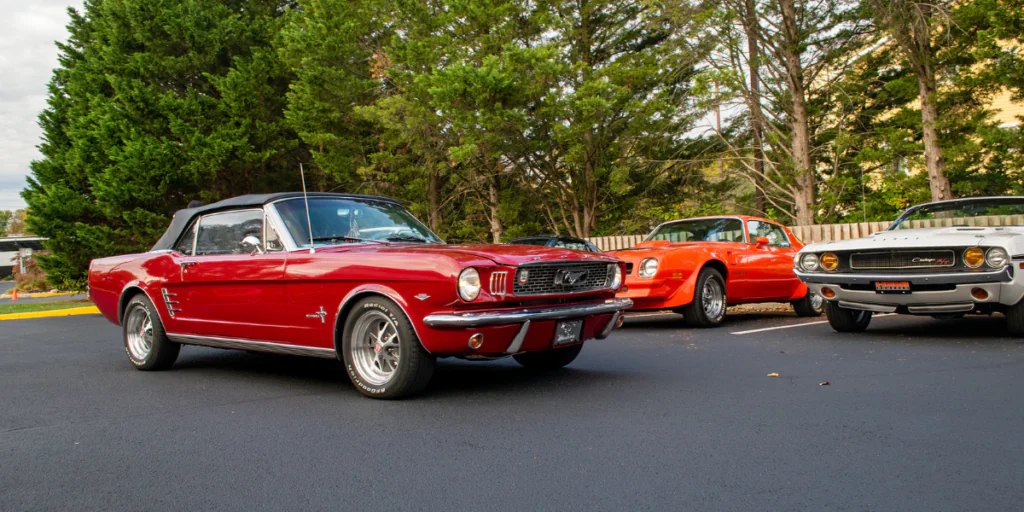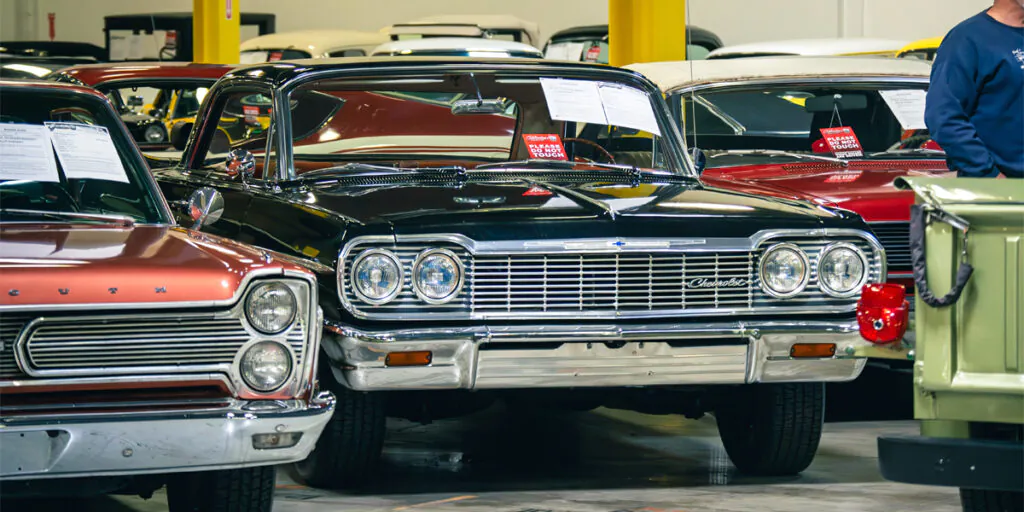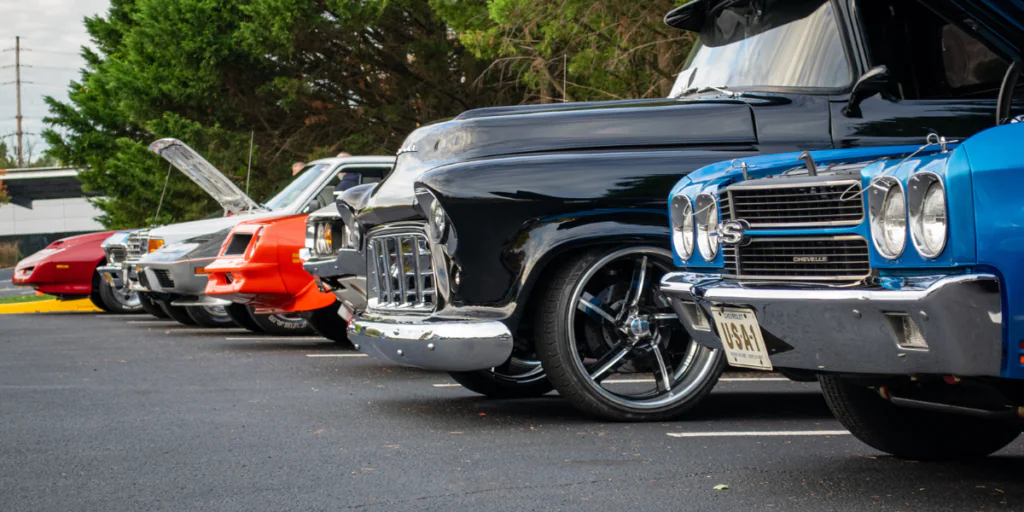
It’s a question many of us are used to hearing, at gas stations or in grocery-store parking lots: “What’s it worth?” There was a time when classic and collector cars were generally just thought of as “used cars”. James Taylor is driving a ‘55 Chevy in 1971’s Two-Lane Blacktop because it was cheap to buy, not because Tri-Fives were classics. They weren’t classics yet!
Nowadays, however, most people expect that classic cars are worth some money, and they also expect that the value of those cars will rise over time. There are even some people who look at classic and collector cars as an investment first and a hobby second. We don’t necessarily recommend that approach, because driving your classic is a joy you shouldn’t skip. So we’ve come up with this list of ten collector cars gaining value in 2026, the models catching the eye of enthusiasts and investors alike. If you are weighing the best collector cars to buy in 2026, this is a good place to start.
Collector Car Market Trends in 2026
After the pandemic-era surge of 2021 and 2022, the collector car market has cooled into something more selective. Values across the board have largely normalized, but that headline hides the real story: certain classic cars are appreciating in value in 2026 even as the broader market flattens.
The clearest driver is generational. As Gen X and older millennials reach their peak earning years, the cars they grew up wanting are climbing fastest, which is why modern classics gaining value are outpacing much of the market. Auction results and indexes like Hagerty’s Bull Market List point to the same pattern and understanding what drives classic car values is the edge every buyer wants.
Here are the ten cars gaining value in 2026 at a glance, with the full story on each below:
- Chevrolet Tri-Five (1955 to 1957)
- Jaguar E-Type (1961 to 1974)
- Datsun 240Z (1970 to 1973)
- Chevrolet Chevelle SS (1968 to 1972)
- Pontiac GTO (1964 to 1974)
- Porsche 911 (1965 to 1989)
- Toyota Land Cruiser FJ40 (1960 to 1983)
- Ford Bronco (1966 to 1977)
- Dodge Charger (1968 to 1970)
- Classic American pickups (1967 to 1972)
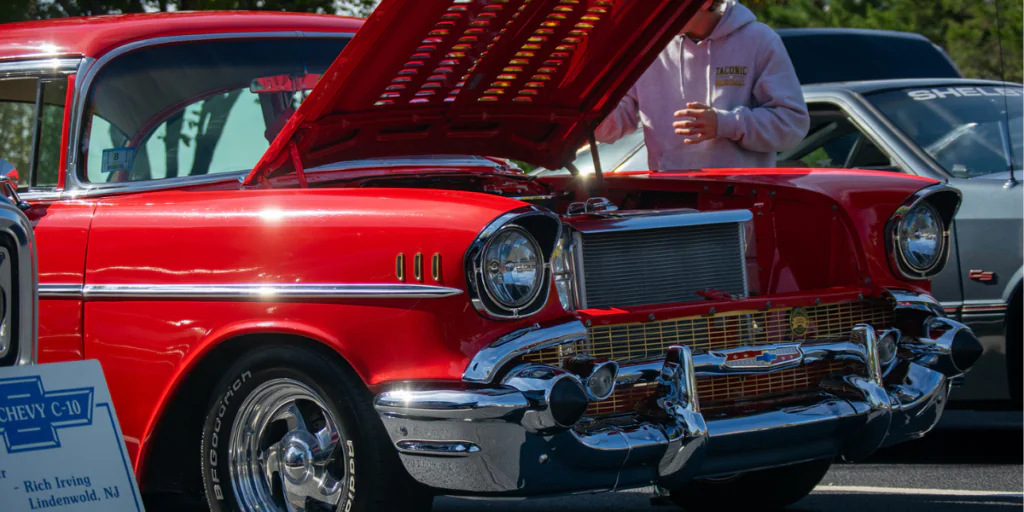
#1: Chevrolet Tri-Five (1955-1957)
To many people, the 1955 through 1957 Chevrolet, especially the Nomad station wagons and some of the upscale Bel-Air variants, represents the classic car. Certainly it’s one of the most versatile. Nearly five million of them were built, and quite a few have survived, in forms ranging from “street racer” to “99-point concours”. As the collector hobby has evolved, so too has the Tri-Five community. In particular, there’s more and more interest in variants outside the Bel-Air two-door and Nomad wagon. Why choose a Tri-Five? Simple: they’re good cars. They were built well, they are easy to repair, the aftermarket for them is absolutely massive, and with the right modifications they do just fine in modern traffic. After years of flat market performance, the Tri-Fives are catching on with a whole new generation of enthusiasts, many of whom are more interested in Two-Lane Blacktop than they are in “Happy Days”. A good Tri-Five is a thing of beauty, and very much worth owning.

#2: Jaguar E-Type (1961-1974)
The E-Type is everything the Tri-Five isn’t: rare, famously fussy, impractical, British, and sleek like almost nothing seen before or since. Like the everyday Chevrolet, however, the E-Type can be a brilliant car to drive. It’s certainly beautiful. There’s very solid support for it in the aftermarket. As with the Tri-Five, the notion of “what makes a good one” has expanded in the past years. The E-Type collectors have stopped turning up their noses at the V-12 cars and the 2+2 models. Looking for an American pilgrimage in your new E-Type? Visit Froelich’s Classic Corner in Steubenville, Ohio. It was once the largest depot of originally manufactured E-Type parts anywhere, with its own Jaguar-themed restaurant.

#3: Datsun 240Z (1970-1973)
The E-Type doesn’t just inspire modern collectors. It inspired Yutaka Katayama, the Nissan executive widely considered to be the father of the Nissan Fairlady Z, sold here as the 240Z. Like the Jaguar, the Z is a straight-six coupe with a long bonnet and explicitly sensual contours. It’s a joy to drive even at mild speeds and offers a sense of occasion like few cars short of a Ferrari. Collectors tend to focus on the first few years of the 240Z, which are considered to be the purest versions with the most over-the-road pace. Don’t let that dissuade you from looking at the 260Z and 280Z, however. You might even find that a 2+2 version is most compatible with your life!

#4: Chevrolet Chevelle SS (1968-1972)
1968 was the year that General Motors really started taking its midsized product seriously, and the proof was in the two-door pudding. Those sleek fastback-styled coupes appeared in trims from plain Jane to long-hooded Monte Carlo, but the Chevelle SS is considered the standout variant, and it has proven to have evergreen collector interest since the early Eighties. Whether you go for a numbers-matching auction superstar or a “tribute” built from a less ambitious six-cylinder Chevelle, expect to attract attention at every classic-car meet. Want more attention? Well…

Found your next collector car? Protect it in minutes.
No depreciation, no surprises. ACI's agreed value coverage gives you the full amount you insured it for.
#5: Pontiac GTO (1964-1974)
The other “star car” in Two-Lane Blacktop is a GTO, of course. It was the upscale muscle car of the era, and it still turns heads today, especially in the outrageous Endura-bumpered variants that finished out the early Seventies. Collector interest is strong in both the first-generation, John Z. DeLorean car and the sleek second gen. The GTO is deeply associated with Woodward Avenue, too, so if you’re a Dream Cruiser, it should be at the top of your list.

#6: Porsche 911 (1965-1989)
Available in everything from 90-horsepower four-cylinder variants to the mighty Turbo, the original Porsche 911 chassis has experienced a remarkable run-in collector appreciation and real-world sales results. They’re a joy to drive and the build quality of these cars has to be experienced to be believed. It’s no wonder that collectors love them. Be aware, however, that the costs can be much more exotic than the experience.

#7: Toyota Land Cruiser FJ40 (1960-1983)
It’s the opposite of the Porsche 911 in many ways. Toyota’s Land Cruiser was designed to be a global tool for bad roads and harsh conditions. The engineering is deliberately simple; if you can fix a Tri-Five, you can probably fix an FJ40, and not just because the engines are related. Like the 911, however, the FJ40 has become a must-have accessory for the Cars and Coffee set. It’s also a natural for your next trip to a West Coast beach.

#8: Ford Bronco (1966-1977)
Ford’s original Bronco was developed with the Jeep CJ and the Land Cruiser in mind. It’s a brilliant design that has stood the test of time and inspired not one, but two modern Broncos. Collector interest has been off the charts lately, and a few builders have emerged who can create a “vintage” Bronco with everything from fuel injection to a subwoofer. This isn’t the world’s greatest freeway cruiser, but it has unbeatable curb appeal.
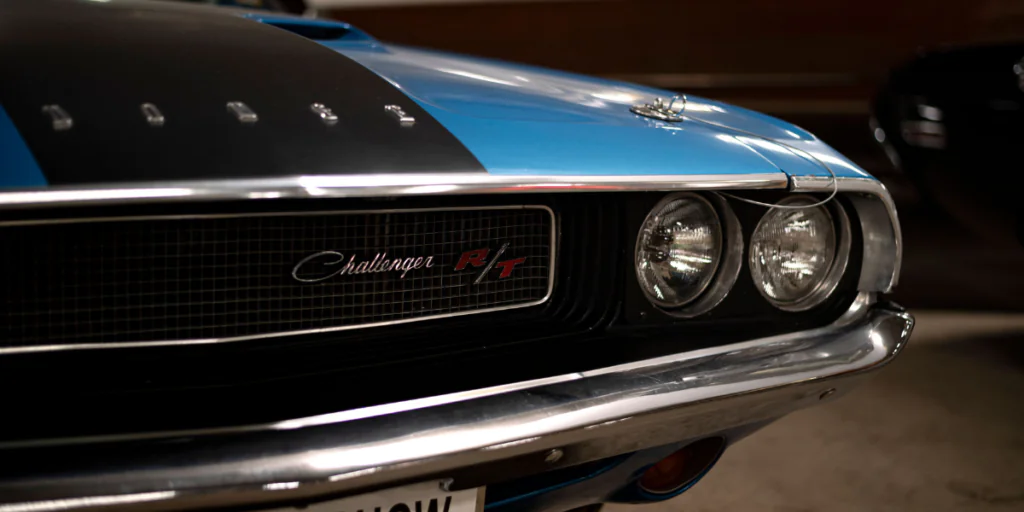
#9: Dodge Charger (1968-1970)
Is there another car with the Charger’s record of durable silver-screen appeal? It was the choice of the bad guys in Bullitt, the good guys in The Dukes of Hazzard, and the antihero in Fast and Furious. The appeal is obvious to see; has there ever been a more handsome 208-inch coupe? It was available with all the great Mopar engines, too. If you’re looking for an American classic with genuine cross-generational appeal, this is where your search begins and ends

#10: Classic American pickups (1967-1972)
Pickup trucks are having a moment right now, in terms of value and social relevance. The television is filled with “slabside” and “dentside” trucks carrying rugged modern cowboys to the ranch or “the patch”. Ford’s F-100 and Chevrolet’s C10 lead the charge. Owning one of these can be a real joy. Not only are they easy to work on, but they’re also among the few classic cars where a bit of rust or damage seems to be just right for the vibe. Don’t you want your truck to look like it’s worked hard? If not, don’t worry, because there are plenty of perfect examples out there, too.
Insuring a Collector Car That’s Gaining Value
Here is the catch with owning a car that keeps appreciating: a standard auto policy pays out depreciated value, which can leave you thousands short of what your classic is actually worth. Agreed Value collector car insurance closes that gap by setting a figure you and the insurer agree on up front, so a covered total loss pays the full amount with no depreciation surprise. If you are new to it, here is how Agreed Value insurance works.
Any of the above cars should let you answer those gas-station questions with a satisfied “Well, it’s worth a little more than it used to be.” In the long run, however, the most important investment return is probably how your classic makes you feel. So choose and spend wisely; the payoff can be tremendous.
Before you buy, take a minute to estimate your classic car’s current value so you know where a given model really stands, because deciding what classic cars are worth buying is easier with real numbers in hand. And if one of these is about to join your garage, it is a good moment to get a quote and make sure it is covered for what it is worth today.
Found your next collector car? Protect it in minutes.
No depreciation, no surprises. ACI's agreed value coverage gives you the full amount you insured it for.