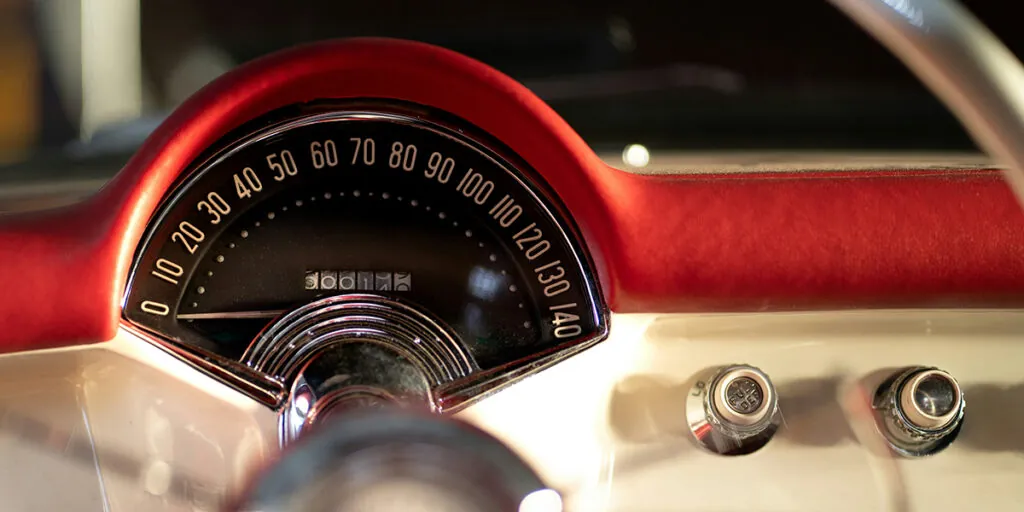
Every classic car enthusiast has dreamed about it, that once-in-a-lifetime find. You’re driving through a small town and spot your favorite classic sitting in the window of an old dealership. The salesman leans over the counter and says, “A local widow traded it in. Been in her garage for 46 years. Only 4,801 miles on the clock. We just want it gone.” Sounds like a dream, right? But before you grab your checkbook, it’s worth asking: is a low-mileage classic really a diamond in the rough, or could it turn into a wallet-draining nightmare?

What “Low Mileage” Really Means
The phrase “low mileage” gets thrown around a lot, and its meaning depends on the car and the crowd. For some collectors, especially those chasing 1990s Japanese sports cars, “low mileage” might mean anything under 150,000 miles — and yes, a ‘94 Supra with that kind of mileage still brings serious money. For diesel truck fans, you’ll even see ads bragging about “low-mileage” Cummins Rams with just 221,000 miles on them.
Point is, low mileage is relative. But whether you’re buying or selling a classic, it’s always part of the conversation. The question is: how much does it really matter?

Mileage vs. Condition: Which Matters More?
In the modern used-car market, mileage is everything. The difference between 40,000 and 80,000 miles can mean thousands of dollars in value, and warranty coverage is often tied directly to the odometer.
But once a car crosses that line into classic or collector status, mileage takes a back seat to overall condition and maintenance.
It’s not uncommon for a 250,000-mile survivor that’s been garaged since the ’80s to look better than a 50,000-mile car left sitting in the driveway. Paint, trim, and weather seals care more about sunlight and storage than how far the car’s been driven.
Sure, interiors show wear. A leather steering wheel at 100,000 miles tells a story. But even there, care and climate can matter more than use.
As Aaron Greenberg of MB Classic Cars in Ohio puts it, “Regular usage, combined with regular maintenance, often results in a car with fewer needs than a low-mileage vehicle with a spotty or uncertain history.” In other words, cars are like people — they age better when they’re exercised.
When Low Mileage Can Be a Problem
The rise of online auctions has made mileage an even bigger selling point. It’s easy to sort by odometer readings when you can’t inspect a car in person. Two cars might look identical in photos, but if one has half the miles, it can sell for twice the price.
But that premium comes with risks. A car that’s been sitting for decades isn’t necessarily preserved, it’s paused in time. Seals dry out, gaskets crack, and fluids break down. The result? A “showroom condition” car that needs a hundred hours of work before it’s roadworthy.
Think of it like a star athlete who’s been on the bench for years — sure, he’s rested, but that first inning or quarter might be rough.

Found your next collector car? Protect it in minutes.
No depreciation, no surprises. ACI's agreed value coverage gives you the full amount you insured it for.
Questions to Ask Before You Buy a Low-Mileage Classic
If you’re hunting for a garage queen or barn find, ask yourself a few key questions before writing the check:
1. What’s your plan for the car?
If you’re buying to flip or show, low mileage adds resale value. But if you’re planning to actually drive it, that premium will vanish as the miles climb. Don’t pay top dollar for a 50-year-old time capsule if your goal is to add another 100,000 miles yourself.
2. How well can you inspect it?
If you can get a proper pre-purchase inspection, higher-mileage cars might open your options. But if you’re buying sight unseen from an auction listing with a few shiny photos, proceed carefully. Documentation and maintenance history are everything.
A 200,000-mile Honda with three documented timing belt changes can be a better bet than a 120,000-mile one with no records at all.
3. Has it been maintained by mileage or by time?
Even for newer classics, time can be as hard on parts as mileage. Fluids, belts, and rubber components all have shelf lives. As “The Car Care Nut,” AMD, reminds Toyota and Lexus owners, “If the transmission fluid interval says 36,000 miles or three years, you still need to change it at three years — even if it’s barely been driven.”

The Real Cost of a Garage Queen
Even the best-stored classics aren’t immune to age. Rubber, plastic, and leather degrade over time. Before firing up a low-mileage car, every seal, gasket, and fluid should be checked or replaced. Suspension bushings, fuel lines, and brake components are all common trouble spots.
And here’s a piece of advice that’s been passed around collector circles for years: “Don’t roll down the windows until it’s in your garage — because they might not roll back up.”
That’s not a joke — switches, motors, and relays corrode when they sit. The first time you use them, they might fail.
Mechanical systems are no different. Cars rely on regular movement to keep seals lubricated and parts functioning. Let a car sit too long and you’re looking at leaks, seized components, or worse. It’s ironic, but sometimes the “cleanest” car on paper can be the one that costs the most to drive.

Treasure the Find — But Be Ready to Work for It
Finding a true low-mileage survivor is one of the most exciting moments in the hobby. Few things compare to seeing a classic that looks like it rolled off the line yesterday. But owning one requires a realistic mindset.
A low-mileage classic isn’t a new car — it’s a preserved one. It may need as much (or more) prep and care as a higher-mileage driver.
With the right inspection, maintenance plan, and insurance, it can absolutely be a treasure. Just go in knowing that every “time capsule” needs a little attention before it’s ready to hit the open road again.
Bottom Line
Low mileage will always carry a certain magic — the bragging rights, the originality, the sense of history. But in the real world of classic cars, condition, care, and maintenance matter more than any number on the odometer.
So, if you stumble upon that once-in-a-lifetime survivor, go for it. Just be ready to get your hands dirty — and make sure it’s protected the way it deserves to be.
Found your next collector car? Protect it in minutes.
No depreciation, no surprises. ACI's agreed value coverage gives you the full amount you insured it for.