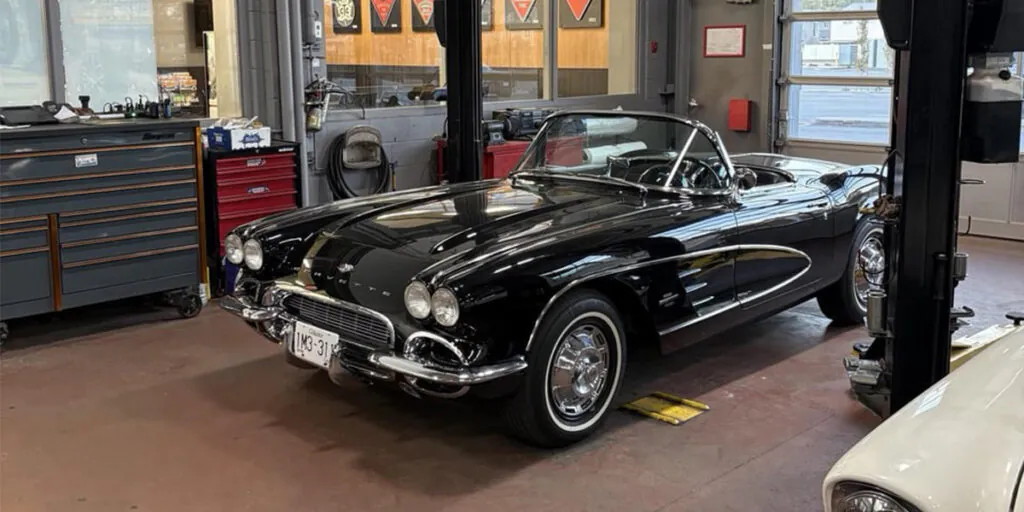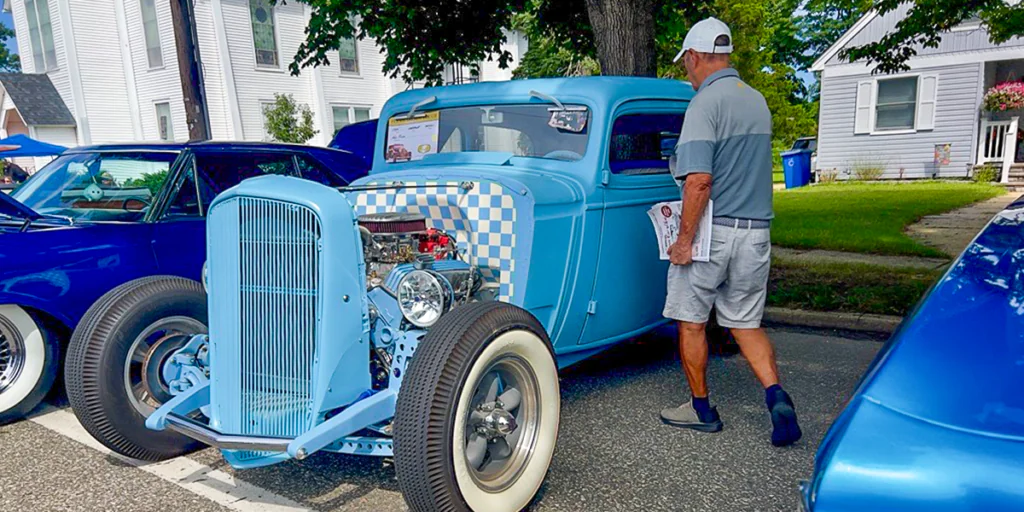
“You can’t pay too much for the right car; you can only buy too soon.” Most collectors are familiar with the idea, even if they haven’t heard the phrase. It is also the right lens for the most overvalued collector cars on the market right now. Not every car appreciates over time, and it’s always possible to lose money on a collector vehicle, but over the past few decades most classics have picked up enough value to justify a little over-exuberance in their last sale or purchase. There are also plenty of vehicles actually gaining value with genuine and fundamental appeal to future collectors, and knowing the difference between undervalued vs overvalued collector cars is what separates a savvy buyer from a hyped one. At the moment, however, there’s an increasing feeling in the market that a few segments of classic and collector cars are more than fully priced.
Even the most overvalued collector cars can be the right purchase for someone who wants a unique combination of color, condition, equipment, and provenance. At their heart, these are emotional purchases, not Treasury bills. If you pay too much for a car, you still get to drive and enjoy it. It’s also true that if you want a certain car, price might literally be no object. On the other hand, some buyers are more concerned about not taking too big of a risk with their purchase. If that describes you, then keep reading!
What “Overvalued” Actually Means Here
Some cars are worth money due to their core qualities. Other cars are worth money due to their core qualities, but they are also the subject of speculation or market hype. There was a market rush on 1976 Cadillac Eldorado convertibles when they were released, because the market believed they would be the last-ever American convertible. That turned out to not be the case, but it would be hard to find someone who didn’t, or doesn’t, enjoy their ‘76 Eldo regardless of market fluctuations.
We’re focusing on cars that, like the Eldorado, might be temporarily (or permanently) ahead of their long-term appreciation curve. Overvalued does not mean worthless. It means the near-term price carries more downside risk than upside, which matters both for buyers and for how a car should be insured.
Is the Collector Car Market Softening?
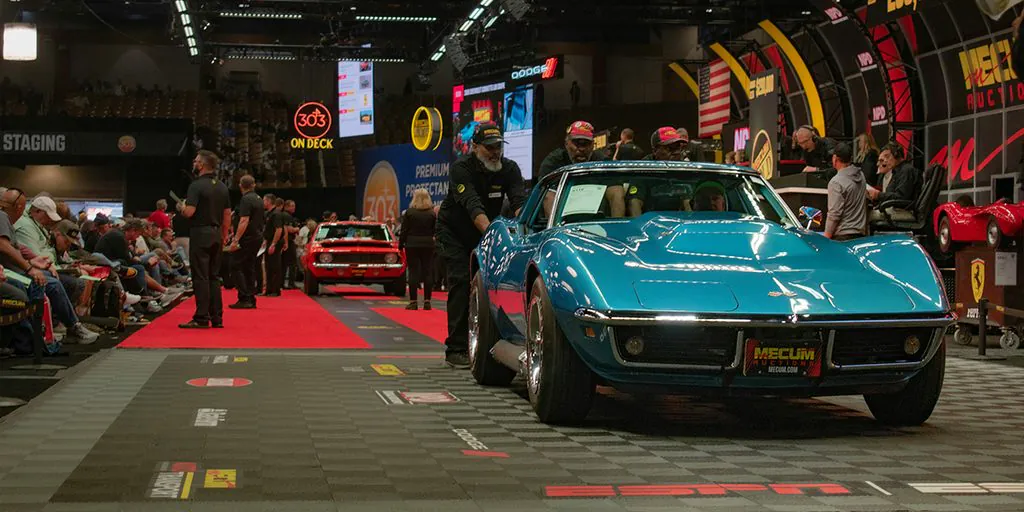
Yes, but unevenly. After the pandemic-era boom of 2021 and 2022, widely followed collector car market indexes slid to a roughly 15-year low in early 2026, and some driver-grade cars now trade 15 to 30 percent below their peak. Higher interest rates have cooled discretionary buying, auction sell-through rates have dipped, and more cars are crossing the block without meeting reserve. Classic car prices at the top of the market, blue-chip cars with real rarity and provenance, are still strong. The softening is in the mid-market, where condition matters more than it has in years. This is a classic car market correction, not a crash, and it is concentrated in the segments below.
Segments to Watch: The Most Overvalued Collector Cars
The market rarely moves uniformly. Instead, trends shift in waves based on generational nostalgia, economic factors, and changing buyer tastes. Here are seven segments where the evidence of collector car values dropping is clearest right now.
Pandemic-Era “Instant Classics”
During the boom of 2021 and 2022, buyers flocked to late-model, limited-edition performance cars. Dealership markups and auction hysteria drove prices to astonishing highs. The hype completely outran the fundamentals.
These vehicles are undeniably incredible machines, but their valuations were built on speculation rather than sustained ownership interest. Now that the broader economy has tightened and the fear of missing out has subsided, the secondary market is flooded with these instant classics. Sellers are finding that the pool of buyers willing to pay exorbitant premiums for a three-year-old car has dramatically shrunk. Approach these pandemic-era flipper cars with extreme caution. The prices are correcting to reflect their status as excellent used cars rather than untouchable financial assets.
Over-Restored Restomods
The restomod movement blends vintage aesthetics with modern performance, and at its peak, the sky was the limit for pricing. Builders were pouring six-figure sums into custom chassis, modern crate engines, and bespoke interiors for 1969 Camaros, early Ford Broncos, and classic Corvettes.
However, the cost of labor and high-end parts skyrocketed, pushing the build costs of these vehicles to astronomical levels. We have reached a point where the cost of the restoration routinely exceeds what the market is willing to pay back. Buyers are realizing that a highly personalized, over-restored restomod is incredibly difficult to sell at a premium because the modifications reflect the original builder’s specific tastes. The market is firmly resisting these inflated price tags, making high-end restomods some of the most overpriced classic cars available today. Restomods also represent a bet of sorts on what the future will value in a modified vehicle, so be extra cautious as the scope and extremity of a given vehicle’s mods increase.
Average-Condition Pre-War Cars
Pre-war vehicles hold an undisputed place in automotive history, yet the market for average-condition examples is demonstrably softening. While Concours-level Duesenbergs or historically significant Bugattis will always command top dollar, the driver-quality Ford Model As, standard Packards, and early Chevrolets are struggling to maintain their peak values.
The reason is largely demographic. The generation that grew up admiring these vehicles is aging out of the hobby. As those longtime owners sell, the buyers replacing them are fewer and younger, and their own nostalgia points to different decades. Younger collectors typically lack the mechanical familiarity to maintain 1920s technology and do not possess the nostalgic connection that previously drove this segment. Consequently, supply is increasing as older collections are liquidated, but demand is not keeping pace.
Traditional British Sports Cars
Similar to the pre-war segment, the middle tier of traditional British sports cars is feeling the gravity of a shifting market. We are talking about average-condition Triumph TR6s, MGBs, and older Jaguar sedans.
For decades, these were the quintessential entry points into the collector hobby. However, recent market data shows a distinct cooling in this category. One widely tracked index of 1950s to 1970s British sports cars fell to a five-year low in early 2026, with older Jaguars among the weakest performers, as buyers shift their attention to modern enthusiast cars from the 1990s and 2000s. While a perfect Jaguar E-Type will always be a blue-chip collectible, the vast sea of driver-condition British roadsters is seeing prices stagnate or decline. Sellers anchored to 2022 valuations are finding their cars sitting on the market for months.
Mid-Century Traditional Luxury Land Yachts
There was a time when massive, chrome-laden American luxury cars ruled the collector market. The land yachts of the late 1950s and the Classic Cars of the 1960s era, particularly standard Cadillac DeVilles, Lincoln Continentals, and Chrysler Imperials, enjoyed a steady climb in value.
Today, the sheer size and impracticality of these vehicles are acting as a deterrent. They take up significant garage space, consume massive amounts of fuel, and require specialized knowledge to restore their complex vacuum and electrical systems. Demand for this segment has softened as the market’s center of gravity moves to newer cars. Younger buyers are prioritizing vehicles they can easily drive, park, and enjoy on modern roads, leaving these mid-century land yachts waiting for buyers who are becoming increasingly scarce.
Found your next collector car? Protect it in minutes.
No depreciation, no surprises. ACI's agreed value coverage gives you the full amount you insured it for.
Trailer-Queen 1980s Exotics
In the collector car world, the term “trailer queen” refers to a vehicle kept in immaculate, undriven condition, preserved solely for show or investment. During boom years, zero-mileage 1980s exotics like the Ferrari Testarossa or the Lamborghini Countach commanded massive premiums.
The current market is experiencing a philosophical shift. Today’s high-net-worth collectors actually want to drive their cars. A vintage exotic with ultra-low mileage can require tens of thousands of dollars in deferred maintenance just to make it roadworthy, as gaskets dry out and belts degrade from disuse. The market has wised up to this hidden cost. The massive premium previously assigned to undriven 1980s exotics is shrinking rapidly. Buyers are now willing to pay more for a well-documented, regularly serviced example with 20,000 miles than a museum piece that cannot be started.
Single-Auction Anomaly Muscle Cars
One of the most dangerous traps for a buyer is treating a single headline auction result as the new market floor. We frequently see this with specific early-1970s American muscle cars. Two wealthy bidders will let their enthusiasm move their auction paddles for them, driving the price of a specific Hemi Cuda or Chevelle SS to a record-breaking number.
This creates a segment of wildly overvalued collector cars based entirely on an outlier event. Unfortunately, the fundamentals of the broader market never actually supported that price jump. As the hype cools, these models face a steep collector car market correction. Before you pay top dollar for a muscle car, you must look at a wide aggregate of recent sales, not just the spectacular anomaly that made the evening news.
Why This Matters for Buyers
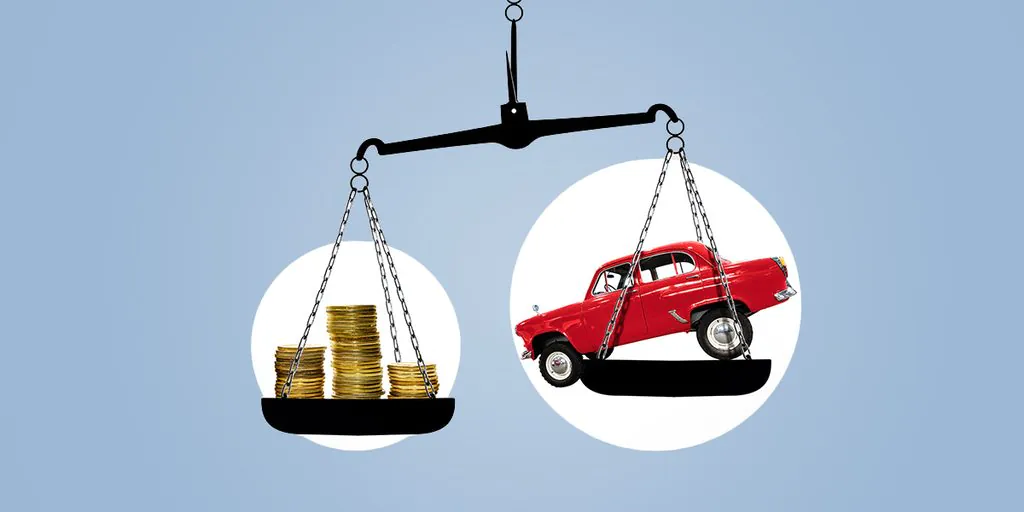
If you are asking yourself, “Are collector cars a good investment?” the answer depends entirely on your timing, your research, and your expectations. Buying into a segment at its absolute peak can often mean your best-case scenario is simply holding value, not gaining it.
Recognizing a softening segment is not a red flag to avoid buying a car you truly love. Instead, it is a signal to negotiate harder and prepare to hold the vehicle longer. The key is to (temporarily!) strip away the emotion and evaluate the vehicle’s true liquidity. Can you sell it easily if you need to? Are there twenty other identical cars currently sitting unsold on internet auction sites?
Do your homework. Look at a minimum of six months of comparable sales data, wherever you shop. Our guide to where to buy a classic car covers how auctions, dealers, and private sales compare. Factor in the cost of necessary maintenance. Most importantly, buy the car because you want to drive it, not because you expect someone else to pay you a 20 percent premium for it next year.

Why This Matters for What You’re Already Insuring
Market shifts do not just affect buyers; they directly impact current owners. Recent industry data shows that only about a third of privately sold collector cars are trading above their insured values. If a car’s market price has cooled since it was purchased or last appraised, an outdated coverage amount can leave an owner overpaying for their policy. Conversely, if you assume all markets are dropping, you might be underinsured if your specific model has actually bucked the trend.
Understanding exactly how classic car insurance works means recognizing the need for regular policy reviews. This is the perfect moment to consult with an expert at American Collectors Insurance. By establishing an accurate, up-to-date Agreed Value coverage amount, you make sure your vehicle is protected for exactly what it is worth in today’s market, without paying unnecessary premiums based on yesterday’s hype.
Frequently Asked Questions
What are the most overvalued collector cars right now?
The segments with the most downside risk are pandemic-era instant classics, over-restored restomods, average-condition pre-war cars, driver-grade British sports cars, mid-century luxury land yachts, ultra-low-mileage 1980s exotics, and muscle cars priced off a single headline auction result.
Is the collector car market softening?
Yes, in the middle. Broad market indexes reached a roughly 15-year low in early 2026 and some driver-grade cars trade 15 to 30 percent below their peak, while rare, blue-chip cars continue to sell strongly.
Are collector cars a good investment?
They can hold or gain value, but buying a segment at its peak often means the best outcome is simply holding value. Buy a car you want to drive, check several months of comparable sales, and treat any appreciation as a bonus.
What does overvalued mean for a collector car?
It means the current price has run ahead of the fundamentals, usually because of speculation or one outlier sale, so the near-term price has more room to fall than to rise. It does not mean the car is a bad car to own.
Should I update my agreed value if collector car values drop?
It is worth reviewing. If your car’s market value has cooled, an outdated agreed value can mean paying for more coverage than you need. If your model has held or gained value, a review helps make sure you are not underinsured.
Buy Smart. Insure It Right.
Finding the right classic is about more than the purchase price. Understand what your vehicle is really worth, whether you’re buying your next collector car or protecting one already in your garage.
Knowing which segments have run ahead of themselves allows you to buy smarter, negotiate better, and protect your assets more effectively. Stay informed, drive what you love, and ensure your investment is properly protected. If it has been more than a year since you evaluated your collection’s worth, contact American Collectors Insurance today for a review of your Agreed Value classic car insurance, or get a free classic car insurance quote in minutes.
Found your next collector car? Protect it in minutes.
No depreciation, no surprises. ACI's agreed value coverage gives you the full amount you insured it for.